Mali breaks ground on Russian-backed gold refinery
The 200-tonne facility near Bamako aims to end decades of exporting unrefined gold for processing abroad
Mali began construction on 16 June 2025 of a new gold refinery near Bamako, built in partnership with Russia's Yadran Group and a Swiss investment company, in a project the country's military leader says will bring it closer to controlling its own natural resources.
The 200-tonne-capacity facility, in which Mali holds a controlling stake, is being built in Senou, on the outskirts of the capital. Speaking at the groundbreaking ceremony, interim president Col. Assimi Goita said: "This deprives our country of substantial revenues that could be used for the development of its economy," referring to decades of gold being exported unrefined.
Ending a costly dependency
Since 1980, Mali's gold has largely been shipped abroad for refining and sale in countries including the United Arab Emirates, South Africa and Switzerland — a pattern common across West Africa, which produces vast quantities of gold but, despite past attempts including by top producer Ghana, still lacks a functioning, globally certified refinery of its own. Goita has said all mining companies will eventually be required to process their gold domestically under Mali's revised mining code, though no deadline has been set.
Once operational, the Senou refinery would have capacity nearly four times Mali's annual gold production, meaning it could process gold from beyond Mali's borders too. Yadran president Irek Salikhov said at the ceremony that the plant is intended to become “a regional centre for processing gold extracted not only in Mali, but also in neighbouring countries such as Burkina Faso” — language that hints at ambitions to make Bamako a processing hub for the wider Sahel.
Part of a broader reform drive
The refinery forms part of a sweeping set of mining reforms introduced since Goita seized power in 2021 and moved away from Western partners toward Russia. Mali's revised mining code — mirrored by similar reforms in Guinea, Niger and Burkina Faso — has unsettled some investors; the same month construction began, a Malian court placed Barrick's Loulo-Gounkoto complex under temporary state control amid an escalating tax dispute.
Tracking a leaky supply chain
Goita has also framed the refinery as a tool against smuggling, saying it would let Mali better track gold production and exports. Like many African gold producers, Mali loses substantial revenue to informal cross-border flows in the absence of certified domestic refining and traceability systems — a gap the government hopes the new plant will help close.
Sources
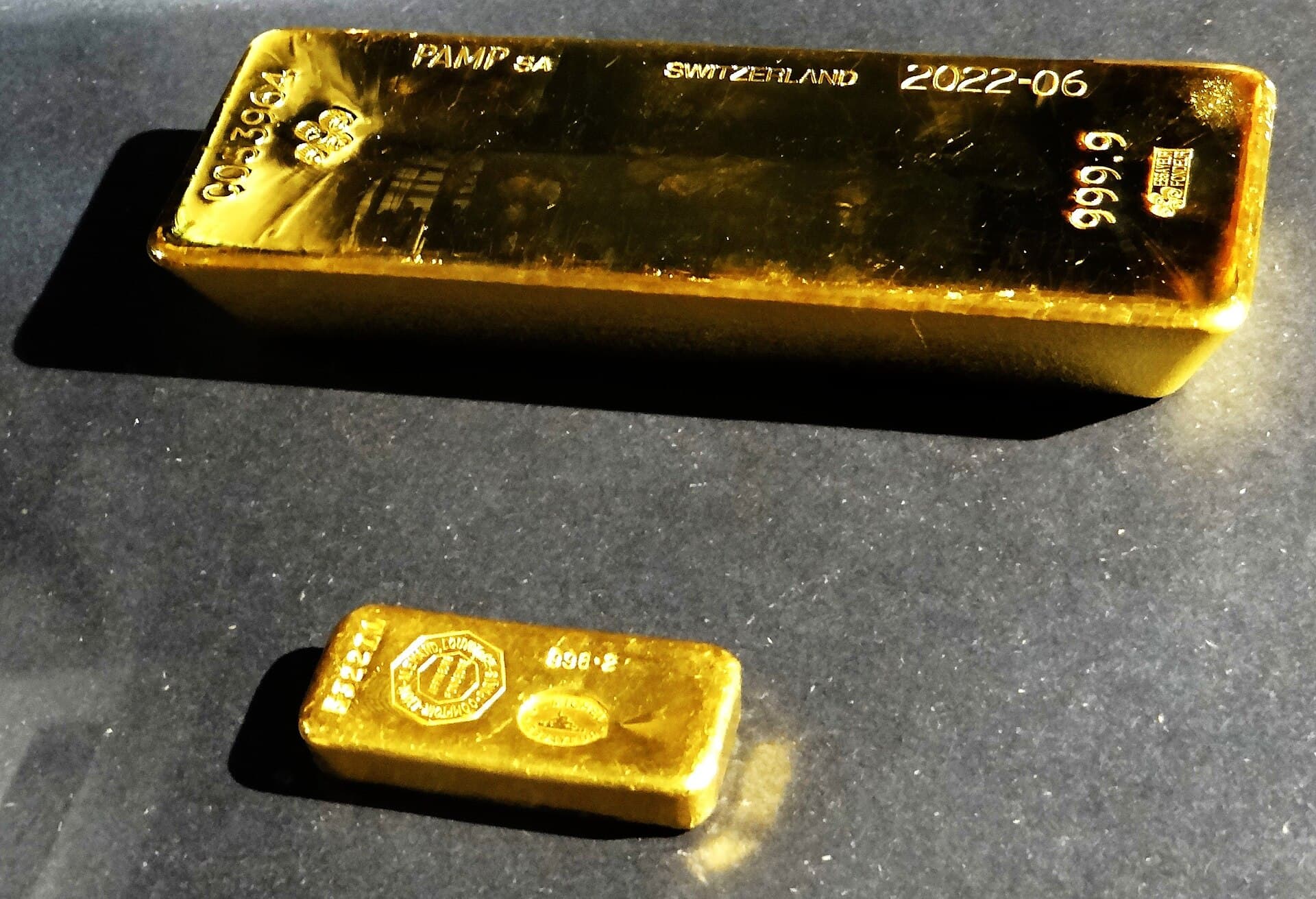
Photo: Refined gold ingots and bars, the form Mali hopes to export directly once its new state refinery is operating. Ibex73, Wikimedia Commons, CC BY 4.0.
Was this useful?
More from MiningWrap
The whole sector in one weekly read.
Deals, policy and markets — every Thursday.
Discussion
Loading comments…