Kipushi finishes debottlenecking early as Ivanhoe holds zinc guidance
A nine-month upgrade programme to lift concentrator capacity by 20% wrapped up ahead of schedule and under budget
Ivanhoe Mines said a debottlenecking programme at its Kipushi zinc mine in the Democratic Republic of Congo has been completed both ahead of schedule and under budget, placing the operation on track to meet its production guidance for the rest of 2025.
Kipushi, a joint venture between Ivanhoe, which holds 62%, and Congo's state-owned miner Gécamines, with 38%, is described as the world's highest-grade zinc mine. First worked more than a century ago, it was placed on care and maintenance during the 1990s before the joint venture brought it back into production in June 2024, targeting 278,000 tonnes of zinc output over its first five years.
Chasing throughput
To hit that target, the venture planned a nine-month debottlenecking programme aimed at lifting the concentrator's processing capacity by 20%, from 800,000 to 960,000 tonnes per annum. Engineering work began in September 2024, with construction completed earlier in August following a second and final concentrator shutdown to commission the new equipment. During that shutdown, Ivanhoe's team also upgraded the dense-media-separation circuit, addressing a problem in which excessive fine material in the ore feed had been causing blockages and unscheduled stoppages.
A rare bright spot
The smooth completion of Kipushi's upgrade programme stood in contrast to the drawn-out recovery under way at Ivanhoe's much larger Kamoa-Kakula copper complex, where seismic-induced flooding had forced repeated downgrades to guidance over the preceding months. For a company whose reputation for delivering projects on time and on budget had taken a knock, Kipushi's performance offered useful reassurance to investors that Ivanhoe's broader operating discipline remained intact even as its flagship asset struggled. The mine went on to keep beating its own records: within a year, monthly zinc output at Kipushi would climb further, helping to offset some of the copper shortfall from Kamoa-Kakula and cementing the operation's status among the world's largest zinc producers. Ivanhoe also used the update to flag progress on backup power generation at the site, part of a broader effort to reduce Kipushi's exposure to the unreliable grid supplied by the DRC's state utility, SNEL, in a region where power shortages have repeatedly constrained mining growth.
Sources
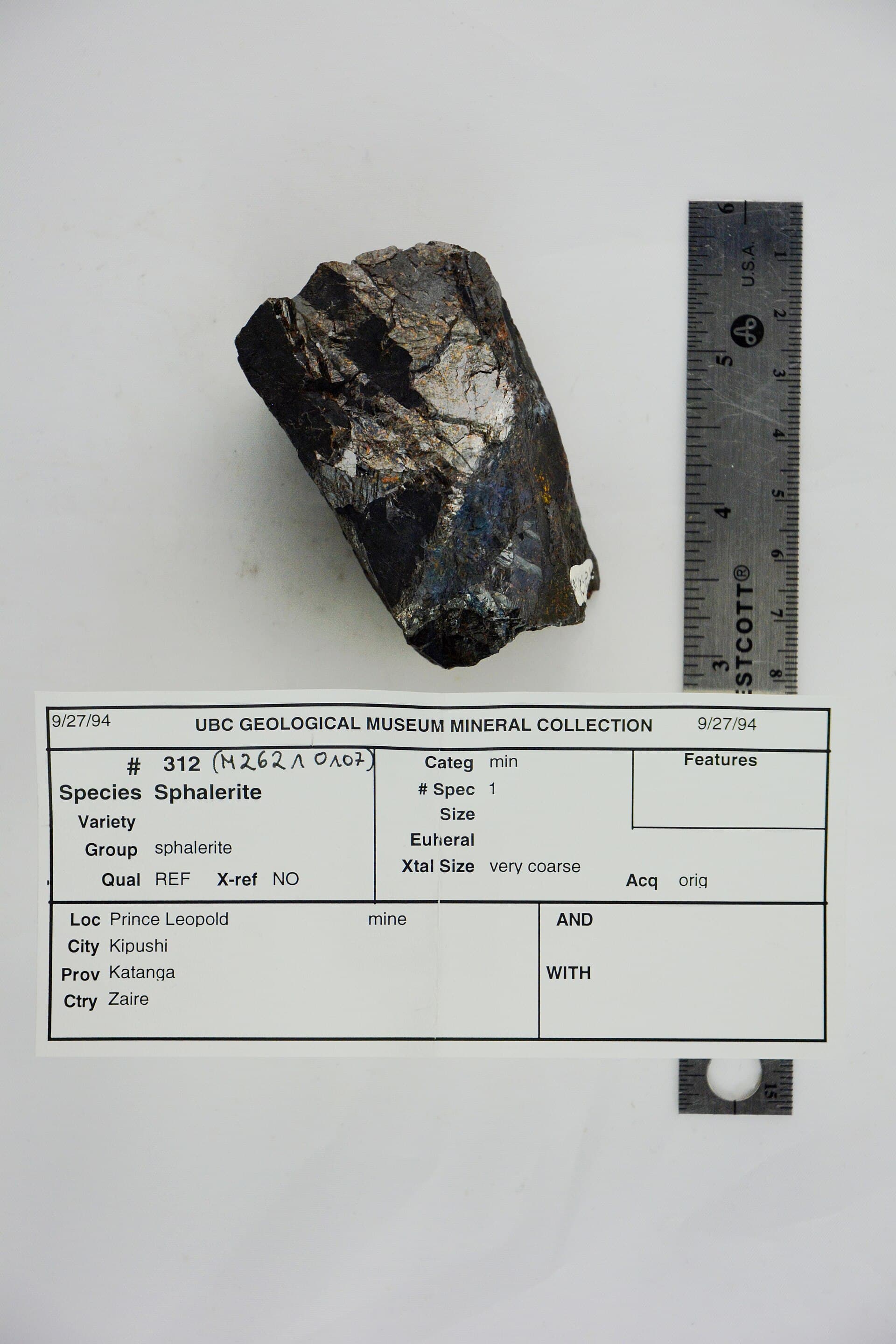
Photo: Sphalerite, the primary zinc ore mineral, of the kind mined at Kipushi in the DRC. Pacific Museum of Earth from Canada, Wikimedia Commons, CC BY-SA 2.0.
Was this useful?
More from MiningWrap
The whole sector in one weekly read.
Deals, policy and markets — every Thursday.
Discussion
Loading comments…