Three years of Sahel resource nationalism: a scorecard for Mali, Niger and Burkina Faso
The juntas have won bigger shares, a Barrick settlement and a uranium mine. Output and reserves tell a less flattering story
About this piece
- Analysis
- Gold, uranium
- 27 August 2026
- 7 min
- mali, niger, burkina faso, gold, uranium, policy
On 21 August Niger's cabinet granted a large-scale uranium mining permit to Tsumco SA, the state-controlled company created after the nationalisation of Somaïr. The uranium operation at Arlit had long been run by France's Orano. The decision, reported by Bloomberg and carried by Miningmx, completes a sequence that began with the 2023 coup. Niger cancelled Orano's rights, took the mine, shipped its yellowcake without the French company's consent, and has now given the permit to itself.
It is a good moment to take stock of the three military-led states of the central Sahel. Since 2023, Mali, Niger and Burkina Faso have rewritten mining codes, seized assets, detained staff and set up national mining companies. Supporters describe this as taking back sovereignty, and critics call it expropriation. Neither label says much about the result. The better question is what these governments have gained and what they have given up.
Mali: the settlement it wanted, and a production gap
Mali's clash with Barrick is the clearest test case. The 2023 code raised royalties and the state's share of new projects. Barrick resisted, and Bamako escalated. In January 2025 it seized about three tonnes of gold from Loulo-Gounkoto. By mid-2025 the complex was under a court-appointed provisional administrator who restarted operations and planned to sell about a tonne of gold from the site's stocks, over Barrick's objections. Barrick wrote off $1bn in revenue and, while the dispute was under way, parted with its chief executive, Mark Bristow.
In November 2025 the two sides settled. According to Bloomberg, as reported by Miningmx, Barrick agreed to pay 244bn CFA francs (about $430m). The amount was made up of 144bn within six days of signing, 50bn in VAT-credit offsets and 50bn already paid. Barrick also accepted the 2023 code. In return Mali returned operational control, dropped charges, moved to release four detained employees and renewed the Loulo permit for 10 years. Barrick withdrew its arbitration claim at ICSID.
On its own terms, Mali won. It got the money, the code and a working mine. The mine is recovering quickly: ministry data reported by Reuters show Loulo produced 6.9 tonnes in the first half of 2026, more than the 5.5 tonnes it managed in all of 2025. Mali's industrial output rose about 30% to 23.5 tonnes in the first half, ahead of the government's 21.2-tonne forecast.
The longer-term figures are less encouraging. Industrial output reached a record 66.5 tonnes in 2023, then fell to 54.8 tonnes in 2024 and 42.2 tonnes in 2025. The ministry's own plan for 2026–2029, seen by Reuters, never gets back above 60 tonnes. It forecasts 43.2 tonnes this year, a peak of 57 tonnes in 2028 and a fall to 50 tonnes in 2029. The same plan projects reserves shrinking from 906.8 tonnes to 748.6 tonnes over the period. The state has captured more of each ounce, but in the government's own planning it will produce fewer ounces than it did before the dispute.
New projects are still moving forward: in August the council of ministers granted B2Gold a permit for Menankoto, which the company expects to produce more than 150,000oz a year from 2028. Toubani Resources' Kobada project is aiming for first gold in 2027. These are mid-sized projects, however. Nothing of Loulo-Gounkoto's scale is in the pipeline.
Niger: control of a mine, not of a market
Niger has gone further than Mali, taking the asset outright. It seized Somaïr in December 2024 and nationalised it by decree in June 2025, accusing Orano of taking more uranium than its agreement allowed. Orano, which held 63.4%, took the case to ICSID. In September 2025 the tribunal ordered Niger not to sell or move Somaïr's uranium in breach of Orano's rights. Two months later a convoy left Arlit anyway. A security source told Reuters it carried about 1,050 tonnes of uranium, with the buyer and destination undisclosed. Orano said the shipment raised serious safety and security concerns.
Niger now controls the mine, and the permit transfer to Tsumco formalises that. What it does not yet have is a clear, lawful route to market. Uranium buyers, mainly utilities with long-term contracts, are among the most compliance-conscious customers in commodities, and Orano says it will pursue legal remedies against third parties. Before the dispute, Niger supplied about 15% of Orano's needs, and it is the world's seventh-largest producer. Every tonne it sells outside the old channels will be sold at a discount that reflects the legal risk. Russia has said publicly that it wants to mine uranium in Niger, and that is the obvious alternative. It would replace one foreign partner with another rather than end dependence.
Burkina Faso: formalisation as the main policy
Burkina Faso has taken a somewhat different approach. Endeavour Mining agreed in 2023 to sell its Boungou and Wahgnion mines to a local buyer, Lilium. When that deal collapsed into arbitration, a 2024 settlement mediated by the government transferred both mines to the state. SOPAMIB, a state vehicle, now holds the government's growing portfolio. The more striking policy, though, is the drive to bring artisanal gold into official channels.
Figures presented by mines minister Yacouba Zabré Gouba and reported by Business Insider Africa show more than 94 tonnes of production in 2025, about 42 tonnes of it artisanal. The country exported 99.13 tonnes worth about CFA5.88trn (roughly $10bn), and gold made up more than 91% of export value. In the first half of 2026, industrial mines produced 26 tonnes. The state buyer SONASP bought about 29 tonnes from artisanal and semi-mechanised miners, against a target of 45 tonnes for the year. Mining brought in more than CFA776bn ($1.4bn) of budget revenue in 2025.
If those numbers hold up, this is the most successful part of the Sahel programme. Gold that was previously smuggled across borders now shows up in state revenue and reserves. It also carries risks. The model only works if SONASP pays artisanal miners enough to beat the smugglers. And with gold making up more than nine-tenths of exports, the budget is heavily exposed to a gold price that has already risen a long way.
What investors should take from it
We draw four conclusions.
First, pressure works on assets that companies cannot walk away from. Barrick had fought the Malian code for two years, and it still accepted it and paid because Loulo-Gounkoto was too valuable to lose. Other governments with world-class deposits will have noticed.
Second, record gold prices have made coercion cheaper for governments and settlement cheaper for companies. At lower prices the same disputes would have been much more damaging for both sides. Sahel mining policy is effectively a bet that the gold price stays high.
Third, the costs appear in exploration and reserves rather than in this year's output. Mali's projected fall in reserves is the most telling figure in this piece. S&P Global's latest exploration survey, reported by Business Day, found that Mali's exploration budgets fell for a third consecutive year in 2025 even as Africa's overall budget rose 11%. Côte d'Ivoire was among the countries where activity picked up.
Fourth, the new partners are different, not absent. Russian interest in Niger's uranium and Saudi investors' talks with Burkinabe officials show that the Sahel is not short of suitors. What it may lack are partners with the technical depth and patient capital to discover and build the next generation of large mines. That is the part of the scorecard that will only be visible years from now.
Sources
- Miningmx: Niger puts Somaïr uranium mining in state hands, 24 Aug 2026
- Miningmx: Orano flags safety risks in Niger uranium transport, 01 Dec 2025
- Miningmx: Barrick agrees with Mali to end dispute over Loulo-Gounkoto, 24 Nov 2025
- Miningmx: Barrick to pay Mali $430m as bows to mining code, 25 Nov 2025
- Miningmx: Mali gold output to stay below 60 tons, 24 Jul 2026
- MINING.COM: Mali gold output jumps 30% in first half, beating forecasts, 18 Aug 2026
- Business Insider Africa: Burkina Faso records over $6 billion worth of gold through official channels in six months, 27 Jul 2026
- Business Insider Africa: Burkina Faso's gold exports hit $10 billion in 2025, now Saudi investors are coming for a share, 05 Sept 2026
- Moneyweb: Endeavour settles African gold mine dispute with buyer Lilium, 27 Aug 2024
- News24: Russia eyes Niger's uranium mines as West African nation ditches France, 29 Jul 2025
- Business Day: Gold drives mining exploration as global budgets fall for third year, 09 Apr 2026
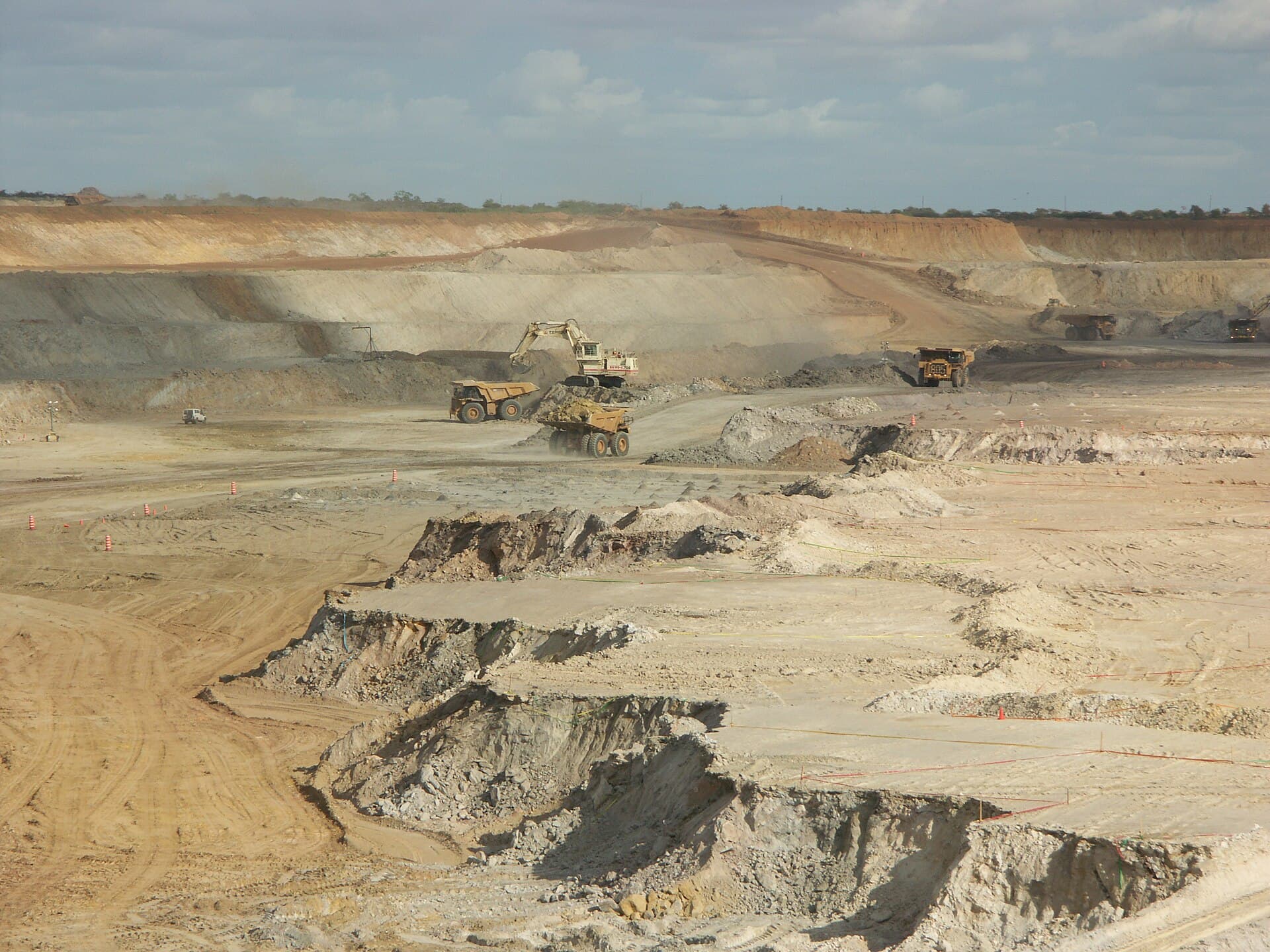
Photo: The open pit at the Essakane gold mine in Burkina Faso. Iamgold, Wikimedia Commons, CC BY-SA 3.0.
Was this useful?
Discussion
Loading comments…