Eskom finally has power to spare. Mines are leaving the grid anyway
Record-low electricity sales, discounted smelter tariffs and a wave of mine-owned renewables show that the cost of power, not its supply, is now the problem
About this piece
- Analysis
- Energy (all mining)
- 9 September 2026
- 6 min
- energy, eskom, south africa, smelting, chrome, esg
Two years ago the main electricity risk for a South African mine was load-shedding: whole shifts lost, hoists stopped and smelters tripped. That risk has largely gone. Eskom's own results presentation in late August said that better generation availability had left it with 2GW to 3GW of surplus capacity, the first such surplus in more than a decade. Yet the same results showed the utility selling less electricity than at any time since 2000. Mining companies, the country's biggest industrial power users, are one of the main reasons.
This is the energy question that now matters for the sector. The grid can supply power, but at prices that are closing smelters and pushing mines to build their own generation. How Eskom and the regulator respond will shape South African mining costs for the rest of the decade.
What the numbers show
According to MyBroadband's report on the annual results, Eskom sold 178 terawatt-hours in its 2026 financial year, 6.2% less than a year earlier. Industrial customers bought 9.7TWh less, a 22.5% drop, which Eskom put down to hardship at ferrochrome smelters. Revenue still rose 4.1% to R354.7bn and after-tax profit more than doubled to R30.3bn. Tariffs kept rising: direct tariffs went up 12.74% at the start of that financial year, and the regulator Nersa approved a further 8.76% increase from April 2026.
Business Day reported that mining and heavy industrial customers paid Eskom R115bn for power in 2025/26, almost R50bn more than in the 2021 financial year. For smelters, electricity can make up 40% of costs. Transalloys suspended three furnaces at its eMalahleni plant, and ArcelorMittal South Africa spent R3.5bn on electricity in its last financial year. Stats SA data show that electricity production in April 2026 was 8.7% lower than a year earlier and 14.7% below its 2019 average. This is falling demand, not a supply shortage.
Discounts for some, higher bills for others
Eskom's response has been to price its spare capacity selectively. It agreed a negotiated pricing agreement with the Glencore-Merafe Chrome Venture and Samancor Chrome at R0.62/kWh. MyBroadband calculated that this was 83% below the average rate paid by households. The Manganese Metal Company received a special tariff as well. Chief financial officer Calib Cassim explained the reasoning. Eskom was committed to buying coal from mining houses under take-or-pay contracts, and falling sales left it with coal it could not burn. Selling cheap power to smelters turned that stockpile into revenue that helps cover fixed costs.
From Eskom's point of view, that is sensible. For the wider industry, it creates a two-tier system. A few smelters with enough bargaining power get power close to marginal cost. Everyone else pays for energy whose cost, by Business Day's count, has risen about 800% since 2007. Eskom's results slide also stated that it would keep earning revenue even when customers self-generate or buy elsewhere, through network charges, wheeling and tariffs that separate energy from fixed costs. Mines building their own solar and wind plants should read that as a warning. The price of leaving the grid, or partly leaving it, is going to be renegotiated.
The mines' own build-out
Mining companies have already moved a long way. Reuters, as carried by Bizcommunity in August, reported the following figures:
- Anglo American's 50:50 joint venture with EDF, Envusa Energy, now generates 520MW (280MW wind and 240MW solar). That covers about 30% of the energy used by Anglo's South African mines. Envusa has a 1,500MW pipeline and hopes to reach 3,000MW by 2030. Its chief executive, Nicole Mason, puts wind and solar at 20% to 30% cheaper than grid power.
- Sibanye-Stillwater took about 99% of the energy for its PGM operations and 88% of the electricity for its gold mines from Eskom last year. It has contracted 835MW of renewable capacity, 164MW of it already running. Chief executive Richard Stewart expects renewables to supply about 64% of the South African operations' energy by the end of 2028.
- Exxaro's Cennergi runs 297MW and has 593MW in its near-term pipeline. A 68MW solar plant has cut Grootegeluk's grid use by 30% and saves about R100m a year.
- Thungela is testing coal-bed methane at Lephalale. It says 19 wells could cut R30m to R40m a year from its Eskom bill.
The projects are also becoming more inventive. In early August, Envusa started building a 63MW solar plant on a rehabilitated waste-rock dump at Kumba's Sishen mine, with Nedbank and Absa as lenders, according to African Law & Business. Seriti Green's Ummbila Emoyeni wind farm in Mpumalanga started generating from its first 25 turbines in August. Chief executive Peter Venn told 702 that the first phase produces about 155MW and that the wider development should reach 900MW, with a neighbouring expansion lifting it to 1,500MW within three years. Venn's point that mines have plenty of grid connections, which are scarce elsewhere, is important. Old mining land in Mpumalanga could become one of the country's most useful places to site generation.
Our view: the next fight is over the grid's fixed costs
Three conclusions follow.
First, the savings from mine renewables are real but will shrink as network charges rise. Envusa and Sibanye both cite savings of 20% to 30% against forecast Eskom tariffs. That comparison assumes energy and network costs stay bundled as they are today. If Nersa approves tariffs that recover more of Eskom's fixed costs through capacity and connection charges, as Eskom has signalled it wants, some of the saving moves back to the utility. Mining companies modelling power purchase agreements should test them against a tariff structure weighted towards fixed charges, not only against the current headline rate.
Second, baseload still comes from Eskom. Stewart said so directly: renewables are intermittent, storage is still developing, and Eskom provides essential baseload power. Deep-level gold and platinum mines cannot run hoists, pumps and refrigeration on sunshine alone. The realistic end state for most producers is a hybrid supply of contracted renewables, some storage and a smaller but still essential Eskom supply. That makes the terms of the Eskom connection more important, not less.
Third, selective smelter discounts are a stopgap, not an industrial policy. The ferrochrome agreements keep furnaces running and use up Eskom's surplus coal, which is useful while the surplus lasts. But they create pressure for every other energy-intensive user to ask for the same treatment. They also make the price of power a matter of negotiation rather than regulation. A clear, published tariff for large loads that can be interrupted, available to any qualifying smelter or mine, would serve the industry better than a series of individual deals.
The broader lesson is that South Africa's electricity problem has become a pricing problem. Eskom has told investors it expects sales to stabilise around 178TWh over the next five years. It can hold that line only if it stops pushing its largest customers off the grid. Mines, meanwhile, will keep building their own generation whatever Eskom does, because the economics already favour it. The contest now is over who pays for the grid that everyone still needs.
Sources
- MyBroadband: Eskom electricity sales drop 6.2%, but profit increases 116%, 31 Aug 2026
- MyBroadband: Eskom wants to charge solar users and other people for not using its electricity, 08 Sept 2026
- Business Day: Eskom rakes in R115bn from industry as power costs choke players, 07 Sept 2026
- Bizcommunity: Anglo American, Sibanye look to renewables to drop Eskom reliance, 26 Aug 2026
- Bizcommunity: Could the industrial-driven decline in electricity consumption spell trouble for Eskom?, 09 Jun 2026
- African Law & Business: Green light for groundbreaking Sishen solar power development, 02 Sept 2026
- EWN: South Africa's largest wind farm begins generating power, 03 Aug 2026
- The Citizen: Nersa approves 8.76% electricity hike, 16 Mar 2026
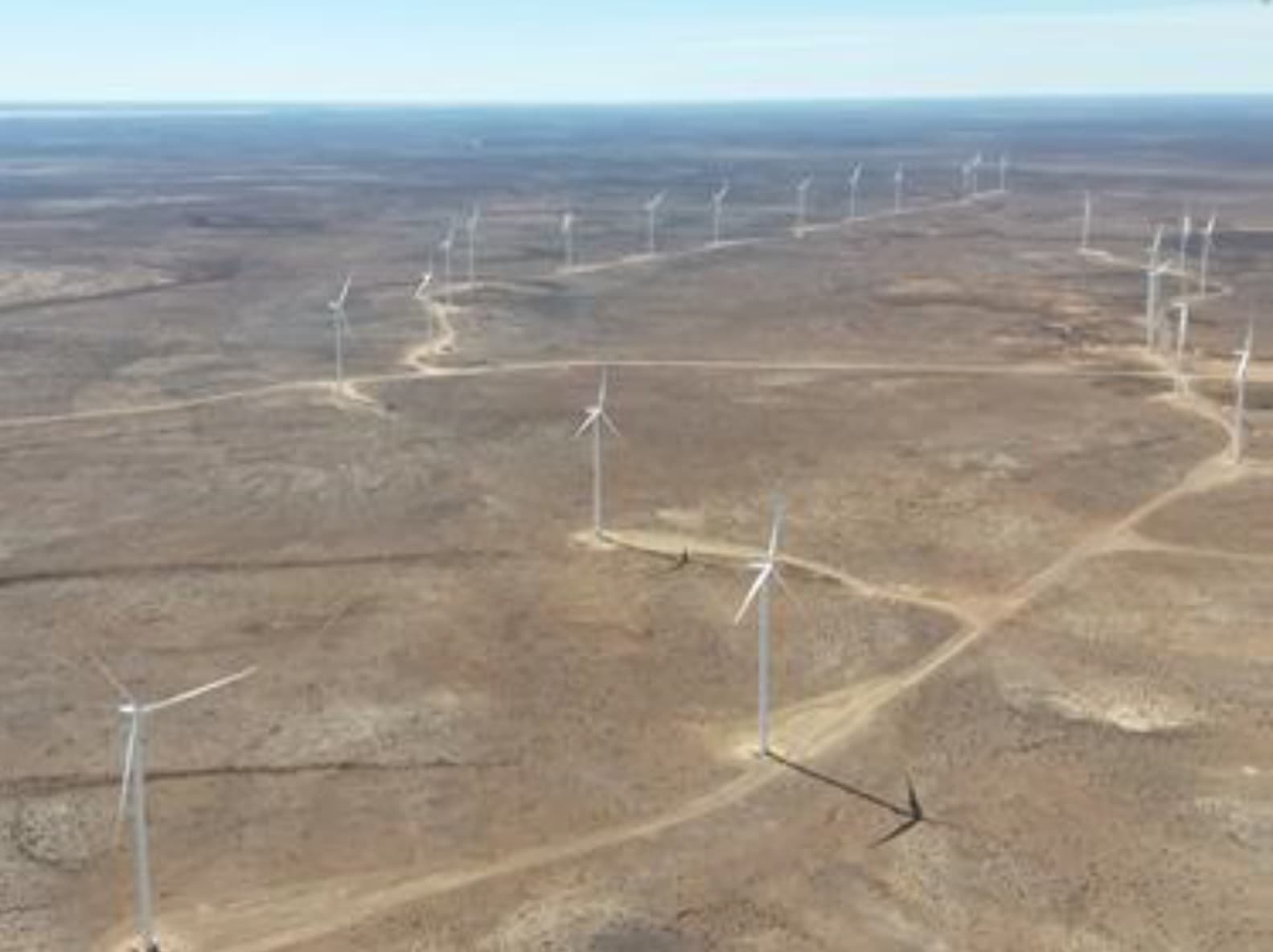
Photo: Wind turbines at the Loeriesfontein Wind Farm in South Africa's Northern Cape. Caracal Rooikat, Wikimedia Commons, CC BY-SA 4.0.
Was this useful?
Discussion
Loading comments…