Simandou shipments jump to 2.2Mt in May as Morébaya port loading improves
Record month follows first-quarter volumes of under 600,000 tonnes a month
Guinea's Simandou iron ore project shipped 2.2 million tonnes in May, according to data reported by Bloomberg on 3 June, a sharp step up from April's previous record of 1.3 million tonnes and from the fewer than 600,000 tonnes a month that left the Morébaya port in the first quarter.
Analysts read the jump as evidence that port constraints were easing. Alexandre Claude, chief executive of DBX Commodities, said the May numbers suggested something had shifted, most likely an improving loading cadence at Morébaya as port infrastructure matured.
Two consortia, one corridor
Simandou is being developed by two groups. Simfer, the joint venture of Rio Tinto, Chinalco and the Guinean state, is developing the southern Blocks 3 and 4. The China-Singapore-led Baowu Winning Consortium Simandou operates Blocks 1 and 2. Both export through the same railway and port system, with combined nameplate capacity of 120 million tonnes a year.
The dry bulk advisory firm Ifchor Galbraiths attributed part of the acceleration to government pressure on the two consortia to operate more efficiently together, partly to optimise royalty payments, and said some equipment had been redeployed from the bauxite industry to support the ramp-up. It forecast shipments of up to eight million tonnes in the third quarter and 12 million tonnes in the fourth.
Still early days
Rio Tinto's official guidance targets full capacity within 30 months, though some analysts expect the timeline to stretch, and the mid-year wet season will test whether the higher run-rate holds. The record came despite a pay strike that halted mining at the WCS blocks from late April; rail and port operations had continued during the stoppage.
Market impact
The additional tonnes are arriving in a market that already looks well supplied. Breakwave Advisors noted in May that Chinese port inventories had climbed to about 172 million tonnes at the end of April, from roughly 139 million tonnes a year earlier, even as Chinese steel production eased. The open question is whether Simandou's high-grade ore displaces existing supply, notably lower-grade Australian material, or simply adds to stockpiles and pressures prices.
For Guinea, rising volumes mean rising revenue. The government has made the project the centrepiece of its Simandou 2040 plan, which earmarks proceeds for infrastructure, agriculture, education and industry. For South African producers such as Kumba Iron Ore, whose premium rests on high iron content and lump ore, a steadily growing flow of high-grade Guinean ore into China is a competitive development to track month by month.
Sources
- Miningmx: Simandou iron ore exports surge in ramp-up milestone, 03 Jun 2026
- Ecofin Agency: Guinea's Simandou Iron Ore Project Ramps Up Exports Six Months After Launch, 04 Jun 2026
- Breakwave Advisors: Simandou ships record quantity of iron ore, swelling Chinese stocks, 11 May 2026
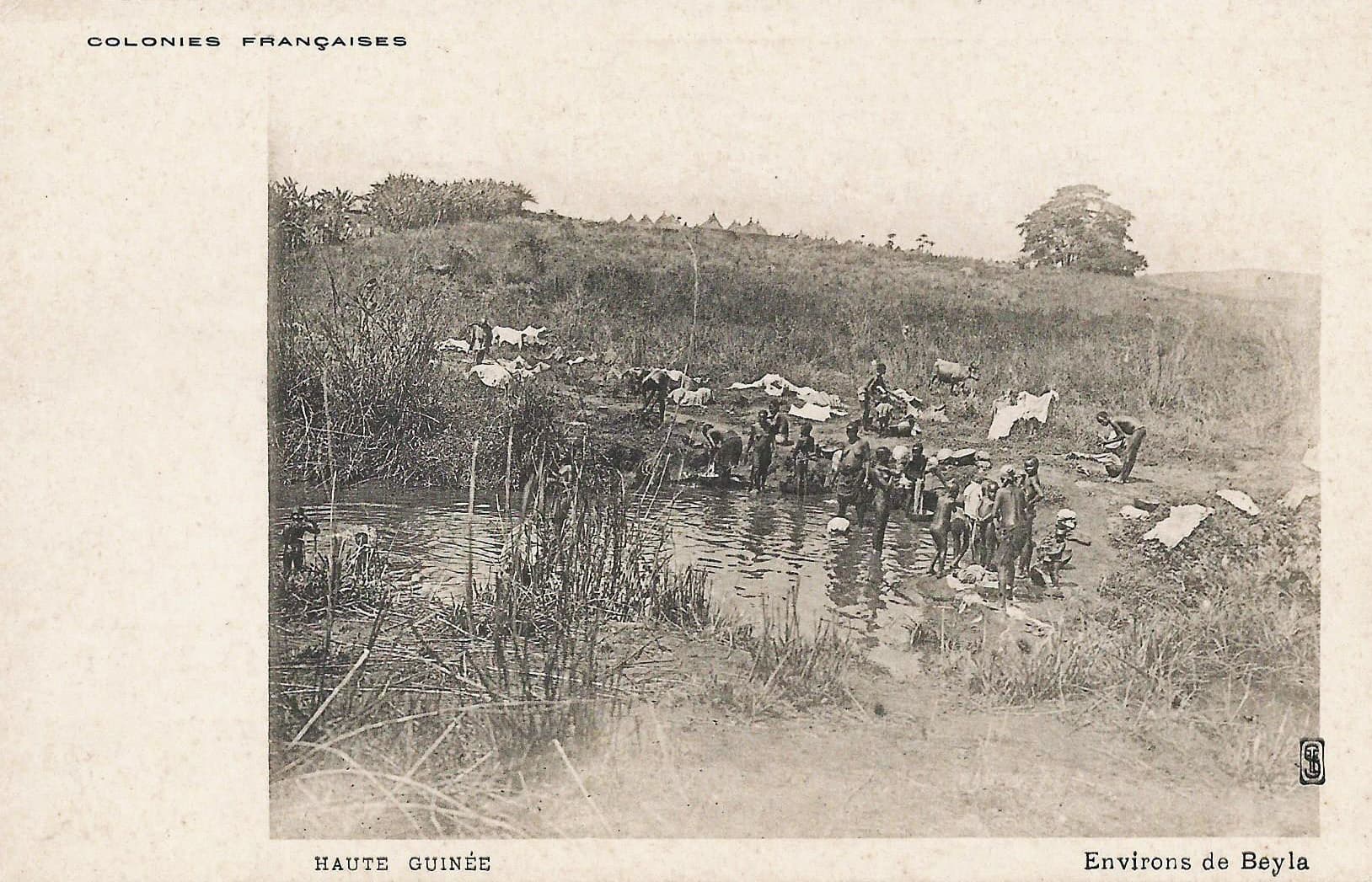
Photo: Historical photograph of the countryside around Beyla in south-eastern Guinea. Unknown authorUnknown author, Wikimedia Commons, Public domain.
Was this useful?
More from MiningWrap
Transnet's rail recovery lifts coal and iron-ore exports to three-year high
The whole sector in one weekly read.
Deals, policy and markets — every Thursday.
Discussion
Loading comments…