Ivanhoe ships first copper anodes via Lobito Corridor to Aurubis
The 99.7%-pure blister copper marks the corridor's shift from raw ore exports to higher-value processed metal
Ivanhoe Mines has made its first copper export via the Lobito Corridor, shipping 99.7%-pure copper anodes from the Kamoa-Kakula complex in the Democratic Republic of Congo to Angola's Atlantic coast for onward transport to Europe.
The shipment marked a move away from raw ore and concentrate exports towards value-added processing and low-carbon copper supply from Africa. The anodes, produced at Kamoa-Kakula's newly commissioned smelter, were bought by Germany's Aurubis Group for further low-carbon refining in Europe.
A corridor built for this moment
The Lobito Corridor, a roughly 1,300km rail route running from the DRC's Katanga mining heartland through Angola to the Atlantic port of Lobito, has become strategically important for Western-backed mineral supply chains seeking to reduce reliance on routes dominated by China. Its backers, including the US International Development Finance Corporation and European partners, have positioned it as a faster, more direct alternative to southern and eastern African routes for getting Congolese minerals to global markets.
From raw ore to refined metal
The shipment's significance lay less in its volume than in what it represented: for years, DRC copper had left the country almost exclusively as raw concentrate or, at best, as blister copper trucked to third-party smelters, capturing relatively little of the value added by processing. With its own smelter now operational, Ivanhoe could instead export high-purity anode directly to a European refiner, a shift that let both the company and, in principle, the DRC's broader economy retain more of the value chain domestically. The move also strengthened the commercial case for the Lobito Corridor itself, giving its backers a concrete example of a Western-aligned, low-carbon supply chain running from a Congolese mine to a European refinery — a template the corridor's champions hoped to replicate at greater volume in the months that followed. Trafigura, which operates the Angolan section of the corridor alongside Portugal's Mota-Engil, would go on to help arrange a further, larger sale of Kamoa-Kakula copper along the same route only months later.
Sources
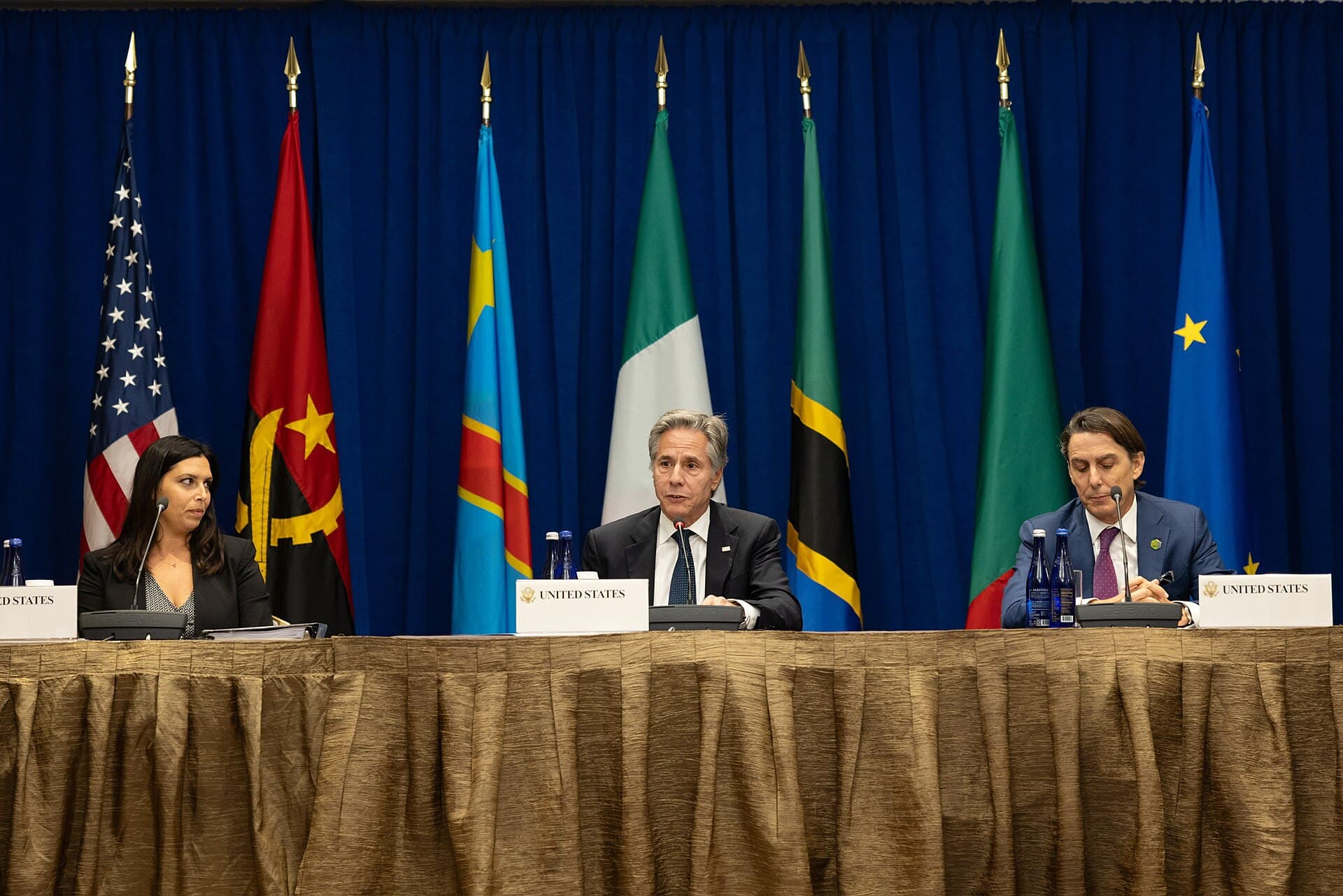
Photo: A roundtable discussion on the Lobito Corridor, the rail route linking DRC copper mines to Angola's Atlantic coast. U.S. Department of State from United States, Wikimedia Commons, Public domain.
Was this useful?
More from MiningWrap
US-backed Lobito deal between DRC and Angola targets week-long copper transit
Mota-Engil lines up $1bn US-backed concession for Congo copper railway
Lobito Corridor operator plans to double mineral cargo in 2026
Lobito rail resumes Congo copper shipments after flood repairs
The whole sector in one weekly read.
Deals, policy and markets — every Thursday.
Discussion
Loading comments…