Giyani's K.Hill study backs $535m battery-grade manganese mine in Botswana
Definitive feasibility study points to a 25-year operation and first production in 2029
Giyani Metals has published a definitive feasibility study (DFS) for its K.Hill manganese project in Botswana, concluding that a 25-year mine and processing operation producing battery-grade manganese products would be economically viable. The TSX Venture-listed company released the study on 28 May.
The numbers
The DFS puts initial capital at $535m and life-of-mine capital at $679m. It estimates an after-tax net present value of $481.5m and an internal rate of return of 20.3%, with net free cash flow of $1.6bn over the mine's life. Over that period the project is designed to produce 1.5 million tonnes of high-purity manganese sulphate monohydrate (HPMSM) and 99,000 tonnes of high-purity manganese oxide. First production is targeted for 2029; an earlier plan had aimed for 2025.
The site is about 80km from Gaborone. If built, it would be Botswana's first manganese mine, adding a new producer to a continent that already dominates supply. The US Geological Survey estimates global manganese output at 20 million tonnes in 2025, with South Africa, Gabon and Ghana together accounting for 14.6 million tonnes.
A different market
Most African manganese is shipped as ore for steelmaking, which consumes more than 90% of global demand. Giyani intends to send its entire output to the battery sector, where HPMSM is a precursor for cathode materials. China controls an estimated 95% of global manganese refining capacity, which is the core of Giyani's pitch to Western buyers. Citing studies it commissioned from SC Insights and Fastmarkets, the company expects battery-grade manganese to move into deficit from 2029.
Interim executive chair Nigel Robinson said the company would now advance discussions with strategic partners. "With China controlling 95% of manganese processing capacity, access to non-China supply of this critical material is constrained," he said, as quoted by Miningmx.
Funding is the hurdle
Giyani has not yet assembled the finance to build the mine. South Africa's Industrial Development Corporation has provided $16m in debt, African Rainbow Minerals has invested through ARCH Emerging Markets Partners, and the Export-Import Bank of the United States has issued a letter of interest for potential financing of $225m. The company has had four chief executives since 2022, and investors will want to see that the new study translates into a funded project.
For Botswana, K.Hill is part of an effort to diversify away from diamonds, which account for around 70% of exports and whose weak market contributed to a 2.8% economic contraction in 2024. Shares in Giyani rose about 20% in early trade after the study was released.
Sources
- Miningmx: Giyani Metals seeks partners for $535m Botswana mine, 28 May 2026
- Ecofin Agency: Botswana Set to Join Africa's Manganese Producers Through K.Hill Battery Materials Project, 29 May 2026
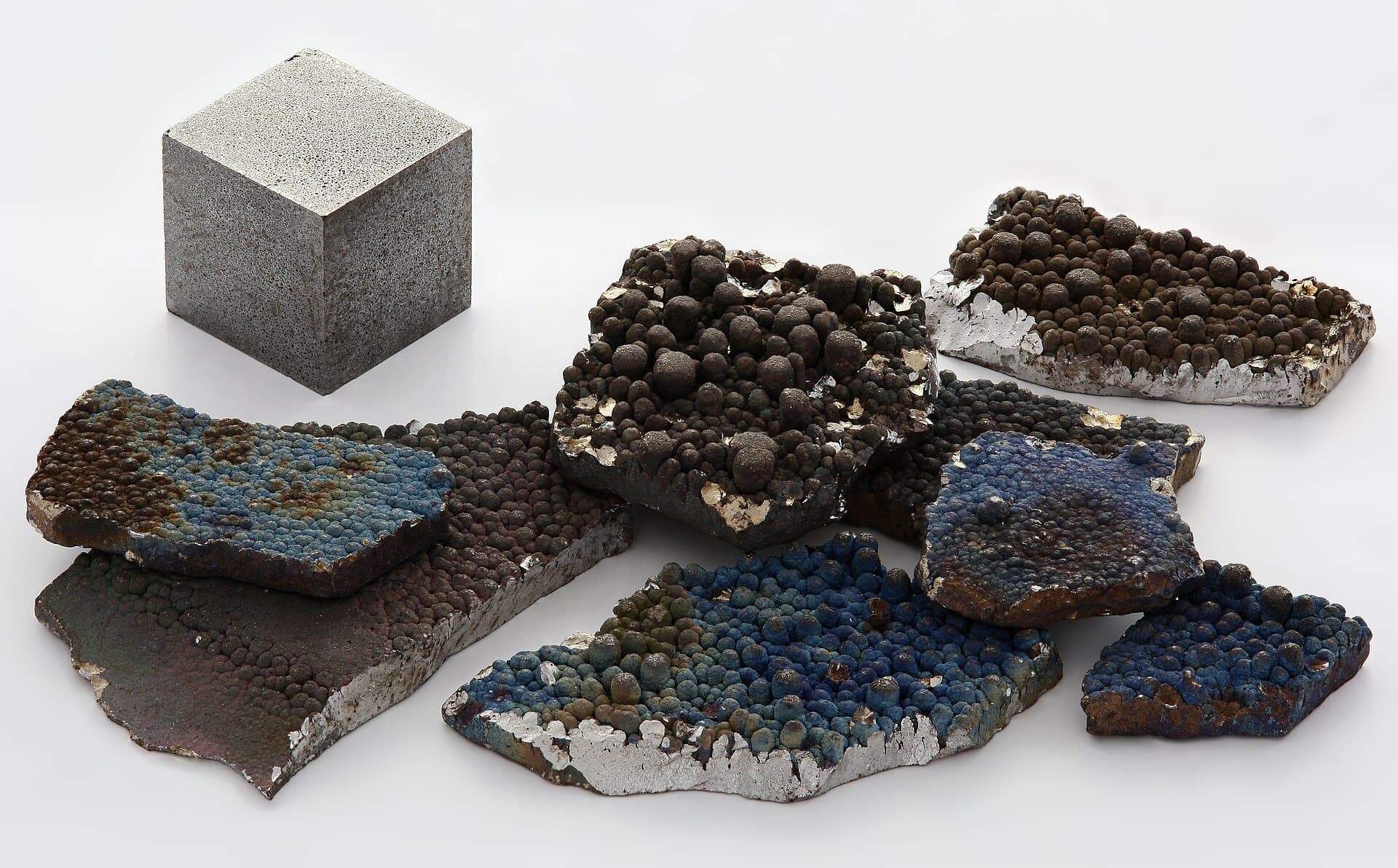
Photo: Flakes of high-purity electrolytic manganese metal beside a one-centimetre cube. Alchemist-hp (talk) (www.pse-mendelejew.de), Wikimedia Commons, FAL.
Was this useful?
More from MiningWrap
Kobaloni targets Europe with Africa's first large-scale cobalt sulphate refinery
The whole sector in one weekly read.
Deals, policy and markets — every Thursday.
Discussion
Loading comments…