DRC sets 96,600-tonne cobalt export ceiling for 2026 and 2027
ARECOMS announces the framework that will replace the export ban, capping shipments at less than half of 2024 output
ARECOMS announced on 22 September 2025 that the Democratic Republic of Congo would replace its cobalt export ban with an annual quota system, setting a hard ceiling of 96,600 tonnes for both 2026 and 2027 — less than half the roughly 204,000 tonnes the country produced in 2024.
How the quota is structured
Of the annual 96,600-tonne cap, 87,000 tonnes is to be distributed among producers on a pro rata basis, calculated mainly according to each company's export volumes over the three years to the end of 2024. The remaining 9,600 tonnes — 10% of the total — is held back as a strategic reserve under ARECOMS' discretionary control, giving the regulator a lever to reward, penalise or reallocate volumes as it sees fit. For the remainder of 2025, before the annual system took full effect, exports were capped at 18,125 tonnes combined across all producers.
The framework is explicitly designed to run at least through 2027, with ARECOMS reserving the right to adjust the ceiling if it judges the market to be "imbalanced" — leaving the door open to tightening or loosening the cap depending on how prices respond.
Why it matters
The move marked a decisive shift in strategy: rather than relying on blunt, open-ended suspensions that had frustrated both companies and the market since February, Congo opted for a fixed, if still tightly controlled, ceiling that gave producers at least a notional basis for planning. But halving exports relative to 2024 output guaranteed that miners would keep producing more cobalt than they could sell abroad — meaning either stockpiling in-country, curbing mine output, or diverting more attention to co-produced copper, a dilemma that would play out differently at CMOC, Glencore and Eurasian Resources Group over the following year.
Because Congo supplies over 70% of the world's mined cobalt, a ceiling set well below actual production capacity had immediate implications for global battery-metal supply chains, tightening feedstock available to Chinese refiners and supporting prices that had collapsed to nine-year lows earlier in the year.
What happens next
The quota framework needed to be translated into an actual export mechanism — allocations to individual companies, verification procedures and a date for trade to resume — all of which followed in the weeks after the announcement, culminating in the formal lifting of the export ban the following month.
Sources
- Benchmark Minerals: DRC to lift cobalt export ban and impose quotas through 2027, 22 Sept 2025
- Fastmarkets: Cobalt export quotas: DRC sets limits to rebalance global supply, 22 Sept 2025
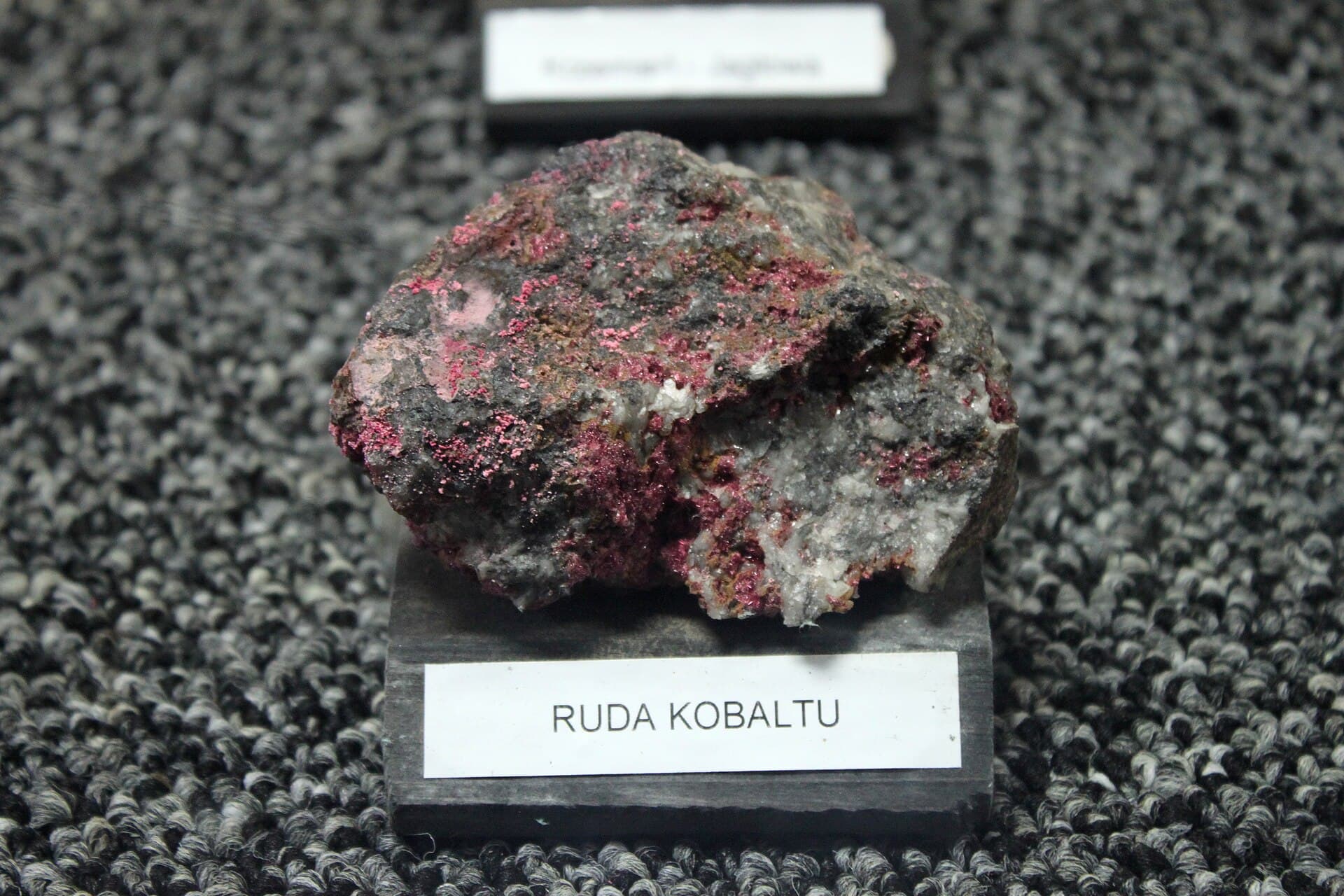
Photo: A sample of raw cobalt-bearing ore. Crusier, Wikimedia Commons, CC BY-SA 3.0.
Was this useful?
More from MiningWrap
The whole sector in one weekly read.
Deals, policy and markets — every Thursday.
Discussion
Loading comments…