South Africa adopts its first Critical Minerals and Metals Strategy
Cabinet approved South Africa's Critical Minerals and Metals Strategy in May 2025. It ranks PGMs, manganese, iron ore, coal and chrome as highest priority and focuses on exploration, beneficiation, logistics and investment incentives.
Department of Mineral and Petroleum Resources
South Africa
- Draft
- Comment
- In force19 May 2025
At a glance
- In force
- Policy
- Department of Mineral and Petroleum Resources
- South Africa
- PGMs, manganese, chrome, iron ore, coal and others
- 19 May 2025
- 20 May 2025
South Africa has a formal strategy for its critical minerals for the first time. Cabinet approved the Critical Minerals and Metals Strategy in mid-May 2025, and Minister Gwede Mantashe released it on 20 May 2025, the same day the department published the draft Mineral Resources Development Bill.
What it prioritises
The strategy ranks minerals by their importance to South Africa rather than simply adopting lists drawn up by importing countries. Platinum group metals, manganese, iron ore, coal and chrome are rated as the highest priority. Vanadium, rare earth elements and gold are placed in a moderate-to-high band, while lithium, cobalt, nickel, copper and titanium are moderate priorities.
Minister in the Presidency Khumbudzo Ntshavheni said the pillars of the strategy are exploration and beneficiation, investment, localisation, streamlined regulation, innovation in mining technology, workforce skills, improved transport and logistics, and investment incentives. The document also emphasises cooperation with other countries in developing the sector.
Implementation
A year on, the department says the strategy has moved into implementation. In his May 2026 budget vote, Mantashe declared that the era of passive policy was over. The department points to the R400 million Junior Mining Exploration Fund, which has backed 13 projects including work at Giyani and Bothaville, and to the Council for Geoscience's mapping programme, which has raised national onshore mapping coverage from under 5% in 2019 to 20% in 2025/26.
Challenges
Analysts at the Africa Policy Research Institute have highlighted constrained state capacity, weak coordination between government agencies, regulatory uncertainty and unclear treatment of community impacts as risks to delivery. Unreliable and expensive electricity remains a major obstacle to beneficiation, and rail and port constraints at Transnet limit export growth.
Why it matters
The strategy gives Pretoria a framework for negotiating critical-minerals partnerships with the United States, the European Union and Asian buyers, and it underpins newer proposals such as the chrome ore export tax. Its value to investors will depend on whether licensing, energy and logistics reforms follow.
Sources
- SAnews: Critical Minerals Strategy receives Cabinet thumbs up, 15 May 2025
- Africa Policy Research Institute: South Africa's new critical minerals strategy: promises and paradoxes, 15 Sept 2025
- SAnews: Mantashe tables department's budget, 19 May 2026
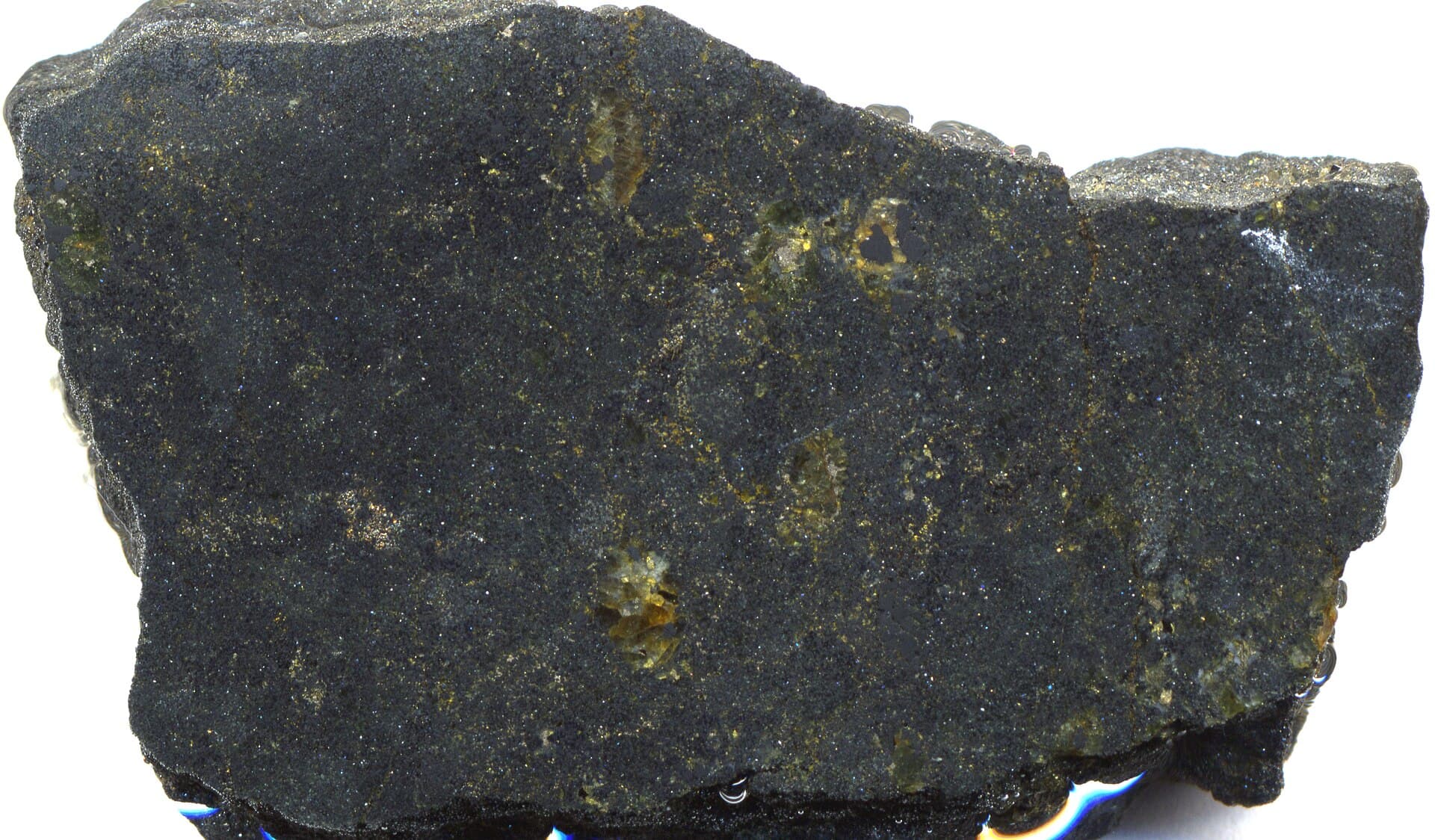
Photo: Platinum-bearing Merensky Reef ore from the Rustenburg Platinum Mine. James St. John, Wikimedia Commons, CC BY 2.0.
Was this useful?
Discussion
Loading comments…