DRC suspends cobalt exports for four months to arrest price slump
The Democratic Republic of Congo halted all cobalt exports from 22 February 2025 in an attempt to drain a glut that had pushed prices to multi-decade lows. The suspension, later extended, was replaced in October 2025 by a quota regime.
Authority for the Regulation and Control of Strategic Mineral Substances' Markets (ARECOMS)
Democratic Republic of Congo
- Draft
- Comment
- In force21 Feb 2025
At a glance
- Amended
- Export controls
- Authority for the Regulation and Control of Strategic Mineral Substances' Markets (ARECOMS)
- Democratic Republic of Congo
- Cobalt
- 21 February 2025
- 24 February 2025
The Democratic Republic of Congo, which supplies roughly three-quarters of the world's cobalt, suspended exports of the metal for four months with effect from 22 February 2025. The measure was imposed by ARECOMS, the regulator created to oversee markets for minerals the state classifies as strategic, under a decision signed the previous day.
Why Kinshasa acted
The suspension was a direct response to oversupply. Output from Chinese-owned CMOC Group's two large Congolese copper-cobalt mines had risen sharply, while demand growth from electric vehicles and consumer electronics had slowed. Benchmark cobalt had fallen below $10 a pound, its weakest level in more than two decades apart from a brief dip in 2015, and cobalt hydroxide, the intermediate product most Congolese mines ship, was trading below $6 a pound. ARECOMS argued that exports needed to be brought into line with world demand.
The move marked a shift in how the DRC uses its dominance of the cobalt market. Rather than simply collecting royalties on whatever volumes producers chose to sell, the state signalled that it would actively manage supply to defend price. Glencore, the second-largest producer, had already reduced its 2025 cobalt guidance to 35,000–40,000 tonnes because of weak market conditions.
What followed
The ban was extended in June 2025 and ultimately ran for about eight months. In September 2025 the government announced that it would be replaced from 16 October by a system of annual export quotas, capping shipments at well under half of the country's 2024 output. By mid-2026 cobalt prices were more than 160% higher than when the restrictions began.
For miners operating in Katanga and Lualaba, the episode established that cobalt sales are now subject to state permission. Unsold hydroxide built up inside the country while the ban lasted. For the wider market, the suspension ended a period of cheap cobalt and demonstrated that the DRC is prepared to use export controls as an instrument of industrial and fiscal policy, a template that has since been extended to other minerals.
Sources
- Miningmx: Congo to cut cobalt exports for four months, 24 Feb 2025
- Mining.com: Congo suspends cobalt exports for four months amid glut, 24 Feb 2025
- Mining Technology: DRC to lift cobalt export ban and launch quotas from October 2025, 23 Sept 2025
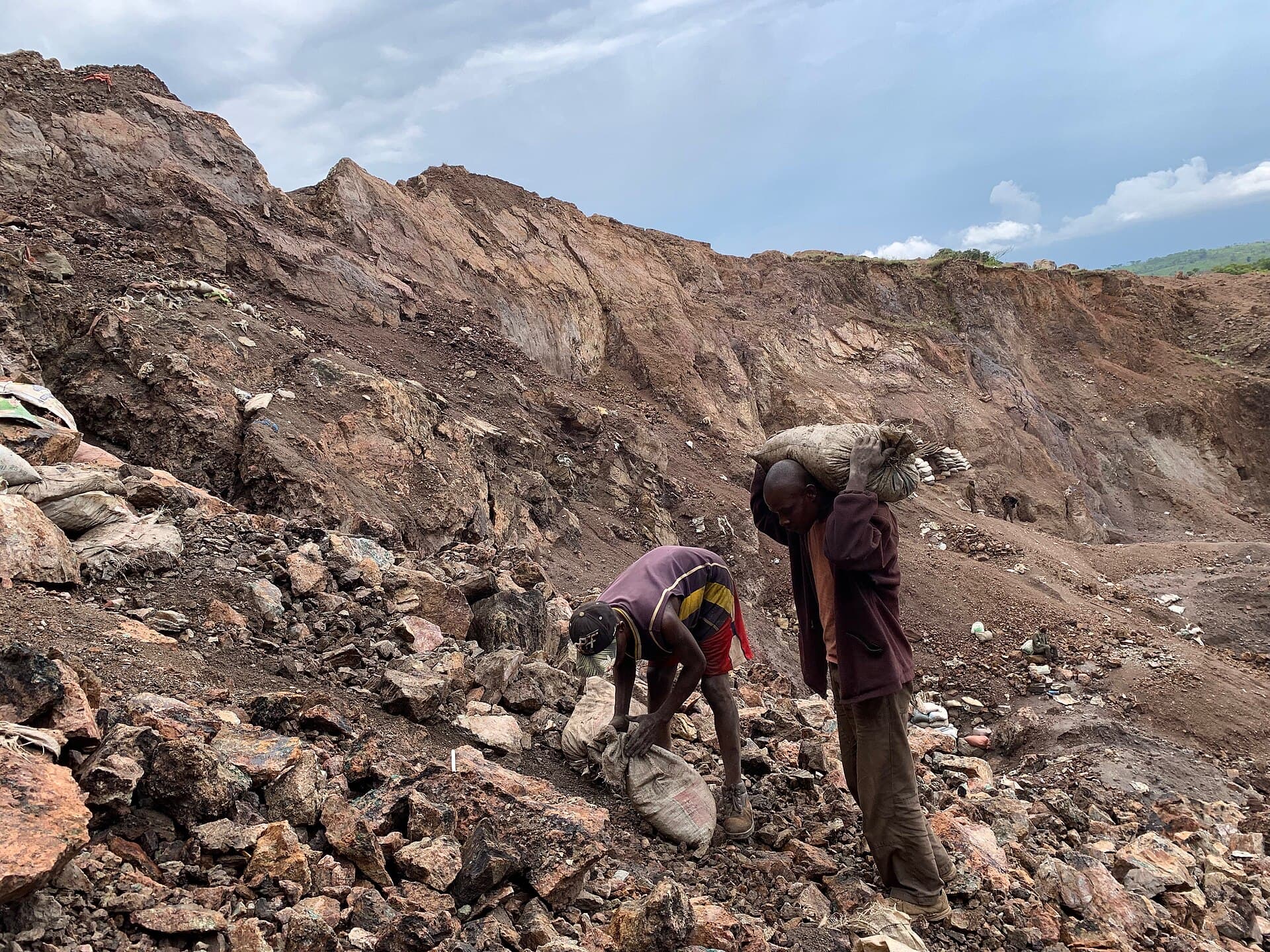
Photo: Artisanal miners working at a cobalt site in the Democratic Republic of Congo. The International Institute for Environment and Development, Wikimedia Commons, CC BY 2.5.
Was this useful?
Discussion
Loading comments…