Osino's Twin Hills gold mine takes shape as Namibia awaits first pour
With 1,500 people working daily on site, the $500m project now targets first gold around August 2027
Construction of Osino Resources' Twin Hills gold project in central Namibia has built up a daily workforce of about 1,500 people and more than 60 contractors since work began in June 2025, the company said in an August 2026 update. Osino Namibia country director Werner Schuckmann said the team was "really excited," describing Twin Hills as "a world-class project" and adding, "hopefully by this time next year we'll pour the first gold."
Namibia's third gold mine
Twin Hills, being built across the Omaruru, Karibib and Usakos regions, is designed as an open-pit operation with more than 2 million ounces of gold in reserve and a projected 13-year mine life. The roughly $500 million project will become Namibia's third operating gold mine and is expected to create more than 1,000 permanent jobs once in production, alongside the temporary construction workforce currently on site. Osino traces the discovery back to 2019, when the company began exploring the deep-seated Karibib fault line before drilling confirmed gold in bedrock beneath a shallow cover of sand and calcrete.
Why it matters
Namibia's gold sector has historically been overshadowed by the country's uranium and diamond industries, but Twin Hills is one of several projects, alongside a broader pipeline of gold exploration, expected to reshape the sector over the rest of the decade. Schuckmann flagged ongoing friction points that are common to junior developers across the region: delays in environmental clearance certificates, uncertainty around Namibia's pending Minerals Bill, and slow processing of work visas for specialist personnel, all of which can push back construction schedules even on well-funded projects.
What happens next
With first gold now targeted for around August 2027, roughly a year later than earlier public guidance, the project's near-term milestones are completing the process plant and resolving the regulatory bottlenecks Schuckmann described, particularly the specialist visa delays that can directly slow commissioning work.
Sources
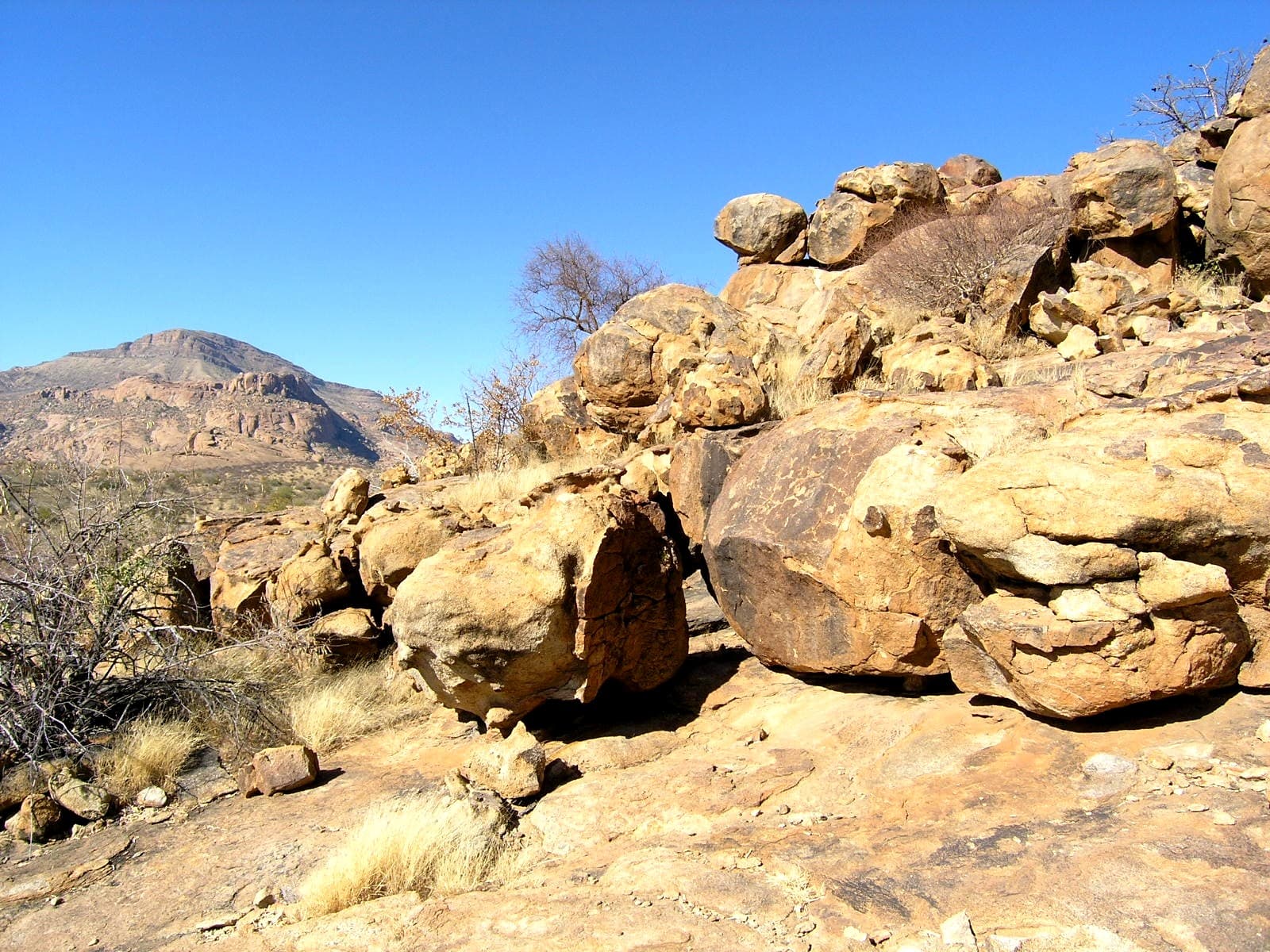
Photo: Mountainous desert landscape in central Namibia, near the Twin Hills gold project. Peter Stenglein, Wikimedia Commons, CC BY-SA 2.5.
Was this useful?
More from MiningWrap
The whole sector in one weekly read.
Deals, policy and markets — every Thursday.
Discussion
Loading comments…