Harmony posts record FY26 earnings as SA underground mines generate a 38% cash margin
Headline earnings per share rose 87% and the group met production guidance for an 11th straight year
Harmony Gold reported record results for the year to 30 June 2026 on 27 August, with revenue up 34% to R99.2bn and headline earnings per share (HEPS) up 87% to 4,363 SA cents. Gold production of 44,464kg (1,429,551oz) was 3% lower than a year earlier but within guidance – the 11th consecutive year the group has met its production target.
The average gold price received rose 35% to R2,069,710/kg, far outpacing a 13% increase in all-in sustaining costs (AISC) to R1,191,698/kg ($2,195/oz). Operating cash flow climbed 48% to R33.6bn and adjusted free cash flow rose 54% to a record R17.1bn. Harmony declared a record final dividend of 750c a share.
South Africa still carries the group
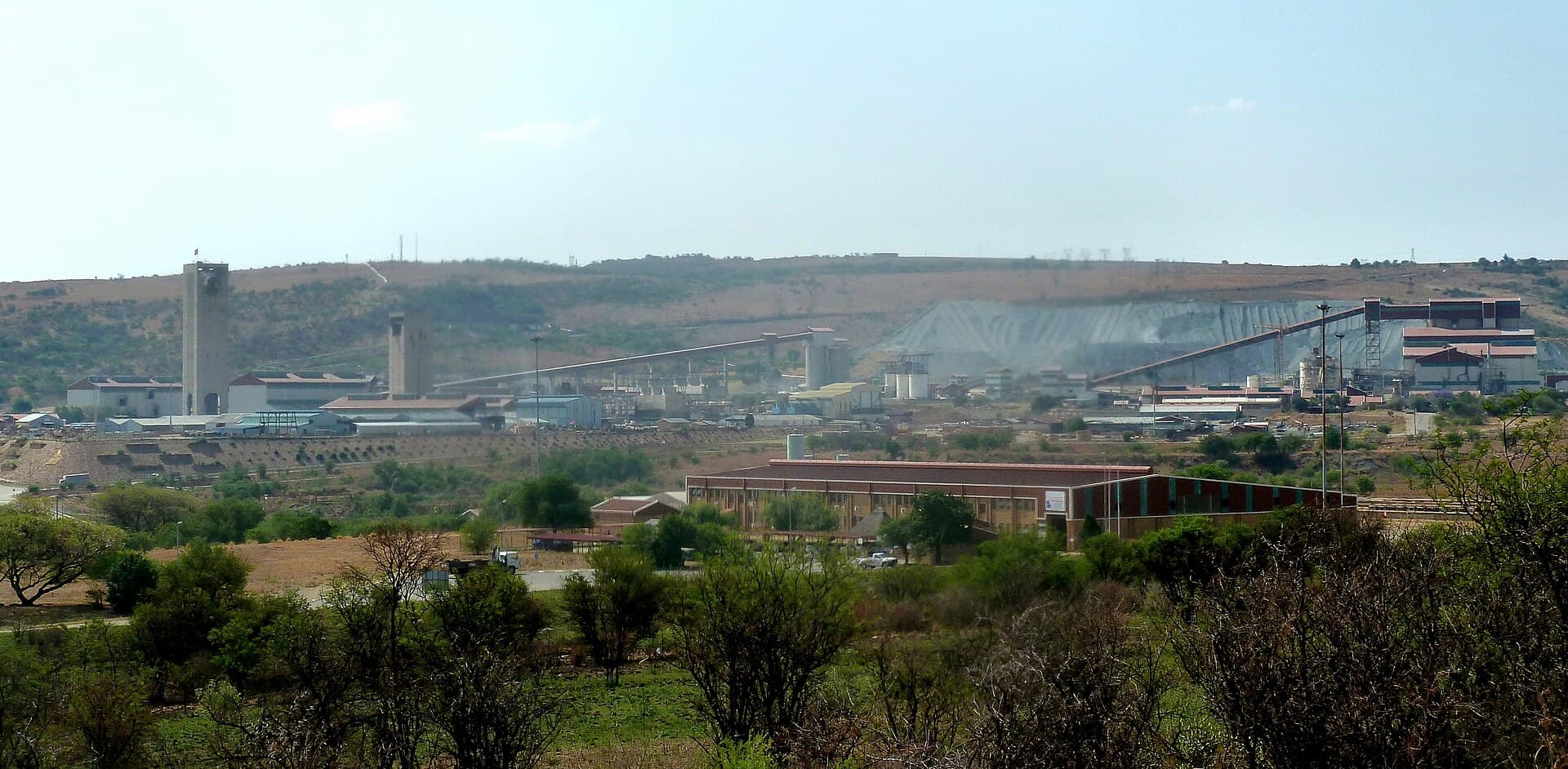
Although Harmony is building a copper business in Australia, the South African mines remain its engine. According to Mining Weekly, Mponeng and Moab Khotsong, the group's high-grade underground operations, produced 15t of gold at 9g/t with a 38% free cash flow margin. Mponeng, the world's deepest mine, did most of the work as Moab Khotsong moves through an ore gap.
The optimised underground mines, Harmony's group of older, lower-grade shafts, produced 17t, with margins widening to 25% and adjusted free cash flow up 284% to about R9bn. The surface and tailings retreatment operations produced 7t at a 46% margin. Chief executive Beyers Nel described retreatment as a source of low-risk, high-margin ounces. The group also extended Tshepong North's life of mine to 15 years from six.
Harmony's lost-time injury frequency rate of 5.05 per million hours was the lowest in its history, although the company has reported several fatal accidents at its South African mines during 2026.
Copper diversification
The CSA copper mine in New South Wales, acquired through the MAC Copper deal, produced 18,207t of copper in its first eight months under Harmony at a C1 cash cost of $2.47/lb. The acquisition moved Harmony from net cash of R11.1bn to modest net debt of R852m. Construction continues at the Eva Copper project in Australia, with first production targeted for the end of 2028.
FY27 guidance
Harmony expects to produce 1.30Moz to 1.40Moz of gold in FY2027 at an AISC of R1,300,000/kg to R1,395,000/kg, with underground grades above 5.60g/t. That implies both lower output and higher unit costs than FY2026. Copper output is guided at 28,000t to 30,000t. Capital guidance is R14.4bn for the gold assets and R2.1bn for CSA.
The FY27 outlook underlines the challenge facing South Africa's largest gold producer by volume: its ageing South African shafts are highly profitable at current prices, but they are not growing. Nel told investors the strategy is about value rather than volume, with Australasia expected to account for about 30% of group production within a decade, up from 16% in FY2026.
Sources
- Harmony Gold: Results for the year ended 30 June 2026 and a final dividend declaration, 27 Aug 2026
- Mining Weekly: Harmony’s underground gold mines producing at 38% free cash margin, 27 Aug 2026
- Investing.com: Harmony Gold FY26 slides: record earnings, 87% HEPS jump, copper growth, 27 Aug 2026
Photo: Surface infrastructure at Harmony Gold's Mponeng mine, Merafong City, West Rand. JMK, Wikimedia Commons, CC BY-SA 4.0.
Was this useful?
More from MiningWrap
The whole sector in one weekly read.
Deals, policy and markets — every Thursday.
Discussion
Loading comments…